

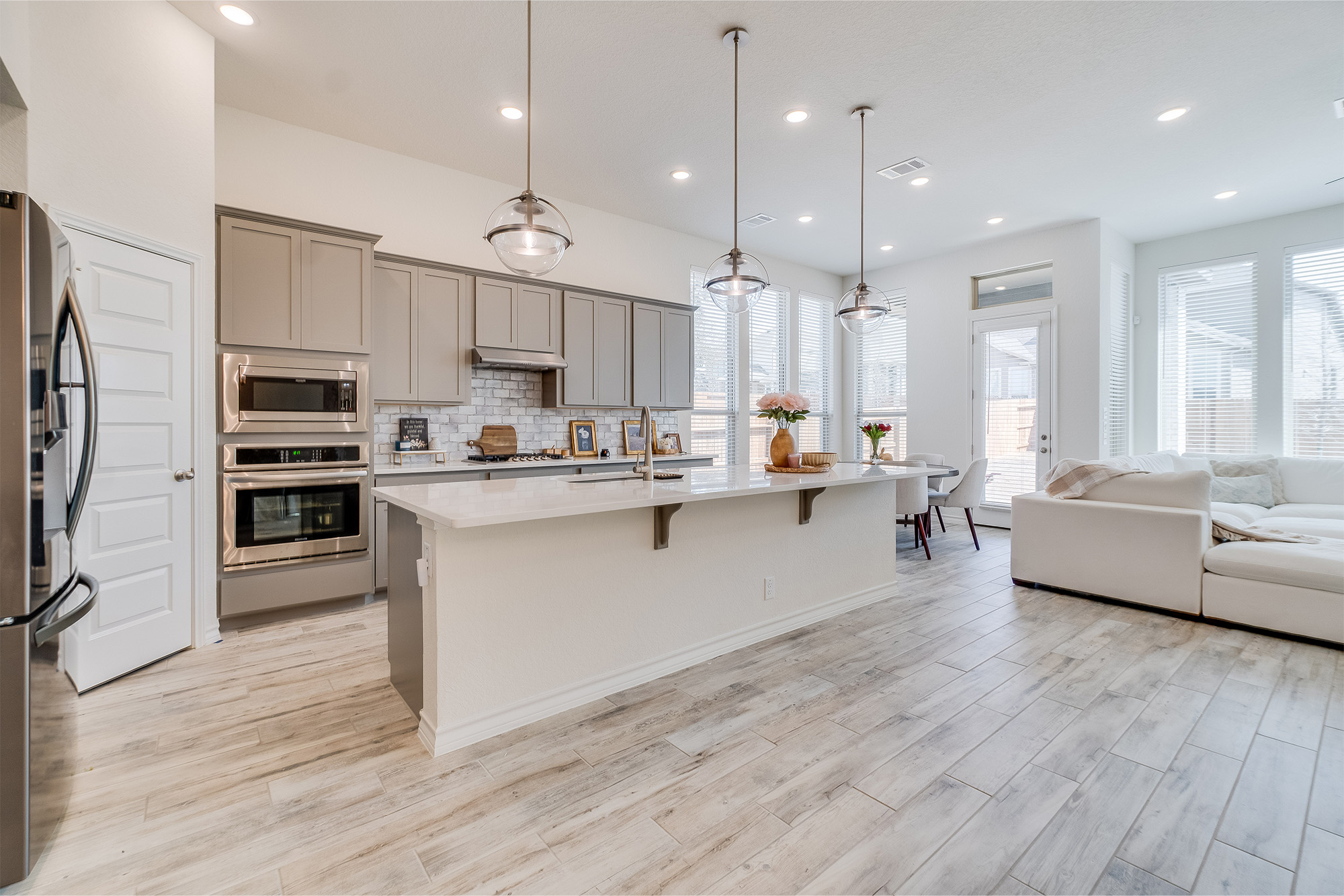
A laminate floor can look remarkably like hardwood, but what happens underneath it can make a big difference in how the finished floor feels and sounds. If you have ever walked across a laminate floor that felt slightly hollow or heard every footstep from the room above, the underlayment may be part of the reason.
For homeowners planning laminate installation, choosing the right laminate flooring underlayment is about more than simply adding a layer beneath the planks. The right option can help improve sound control, provide a more comfortable feel underfoot, and support a successful installation.
Why Laminate Underlayment Matters
Most laminate flooring is installed as a floating floor, meaning the planks are not directly fastened to the subfloor. Underlayment sits between the flooring and the subfloor, creating an important buffer.
Depending on the product, underlayment can help with several things. It can reduce some of the sound associated with foot traffic, provide a little cushioning, and help the flooring feel less harsh underfoot.
It can also help accommodate minor imperfections in the subfloor, although it should never be used to correct significant unevenness. The key is matching the underlayment to the flooring manufacturer's requirements. A thicker or softer product is not automatically better. Too much cushioning can interfere with the locking system of some laminate products.
Foam Underlayment: A Practical All-Around Choice
Standard foam underlayment remains a common choice for laminate flooring because it is relatively simple, lightweight, and available in different thicknesses. Basic foam can provide some cushioning and help reduce the sharp sound of footsteps. It can work particularly well in bedrooms, guest rooms, and other areas where everyday comfort matters.
If sound is a priority, look for a product specifically designed for acoustic performance rather than assuming any foam underlayment will deliver the same result. Different products are engineered for different levels of sound absorption.
In a Florida home, it is also worth considering the subfloor and moisture conditions before installation. The underlayment should be appropriate for the specific flooring system and installation environment rather than selected independently.
Acoustic Underlayment for Quieter Rooms
If your main concern is sound, an acoustic underlayment may be worth considering. These products are designed to reduce the transmission of certain types of noise, which can be particularly helpful in multi-level homes or rooms located over living spaces.
There is a difference between reducing impact noise, such as footsteps, and reducing airborne noise, such as conversations or television sounds. No underlayment completely soundproofs a room. Still, a quality acoustic product can make a noticeable difference in how a laminate floor sounds during normal household activity.
For homeowners interested in current laminate flooring trends 2026, the focus is not only on how convincing a floor looks. Comfort, performance, and the overall experience of living with the flooring are increasingly important parts of the decision.
Moisture Barriers and Installation Considerations
Some laminate products come with attached underlayment, while others require a separate product. Some underlayments also include a moisture-resistant layer. That distinction matters, particularly when laminate installation takes place over a concrete slab. A moisture-control strategy may be necessary depending on the flooring manufacturer's specifications and the conditions of the subfloor.
Avoid automatically installing a separate moisture barrier over a product that already includes one. More layers do not necessarily mean better protection. The subfloor should also be clean, dry, and appropriately flat before installation begins. Underlayment cannot compensate for major subfloor problems. A professional flooring team can help determine what belongs underneath the laminate based on the product, room, subfloor, and installation method.
Choosing the Right Underlayment for Your Home
Start with how you use the room. For a quiet bedroom, you may prioritize acoustic performance and softness underfoot. In a busy living area, durability and compatibility with the laminate locking system may be more important. In a room over a concrete slab, moisture considerations deserve particular attention.
The best laminate flooring underlayment is ultimately the one that works with your specific flooring rather than simply being the thickest, softest, or most expensive option available. If you are considering laminate flooring for your home, Floors Your Way by The Pad Place can help you compare flooring options and installation considerations based on your project.
Contact us today to discuss your flooring needs, and visit our showroom to see available styles and get a better feel for the choices in person. We proudly serve Venice, FL and surrounding communities throughout Longboat Key, FL, Englewood, FL, North Port, FL, Venice, FL and Sarasota, FL.


